
HANDOVERS
Many hands. One movement.
A single waste movement can involve a site team, manager, carrier, receiving site and compliance function. The operational challenge is keeping that story connected as responsibility changes.
Waste movement sits across sites, people, carriers, receiving facilities, managers and compliance teams. Waste X is designed around that real operational chain — not a simplified version of it.
The goal is simple: make it easier to create work, route it, move it, receive it, deal with exceptions and keep a reliable record of what happened.
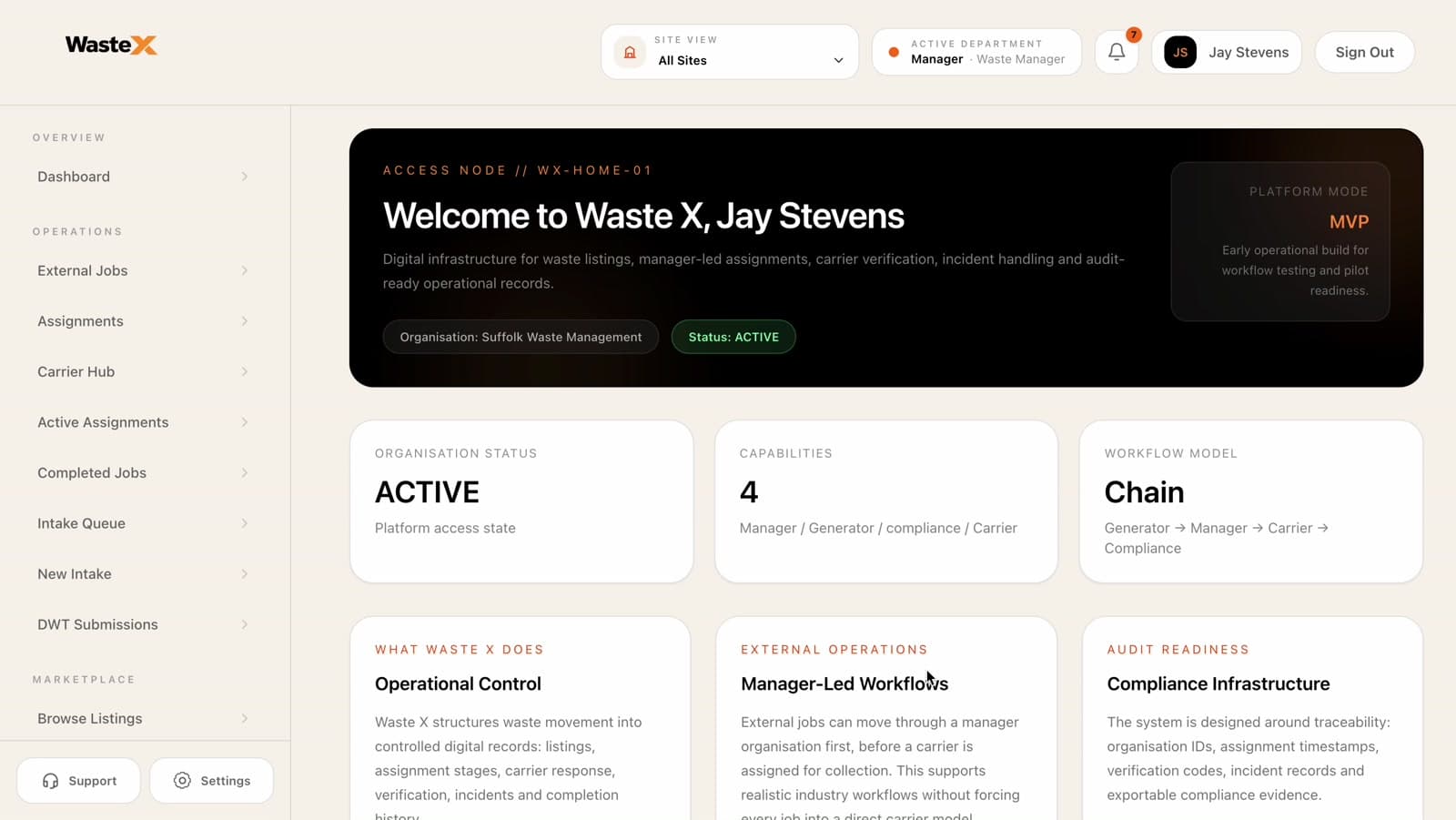
One operational workspace
Different roles. Connected movement.
The industry context
A skip leaving a construction site looks simple from the outside. Operationally, it can involve a producer, project team, manager, carrier, receiving site, commercial arrangement, classification, quantity, handover, receipt and later compliance review.
The difficulty is rarely just moving the material. It is coordinating the people around the movement and preserving enough context that the business still understands the job days, weeks or months later.
PHYSICAL
Waste moves between sites
OPERATIONAL
Responsibility changes
RECORD
Evidence accumulates over time
Why the industry gets messy
Waste operations are collaborative, distributed and often time sensitive. That is exactly where fragmented tools create friction.
HANDOVERS
A single waste movement can involve a site team, manager, carrier, receiving site and compliance function. The operational challenge is keeping that story connected as responsibility changes.

OPERATING MODELS
Some businesses only carry waste. Others generate, transport, receive and manage it internally. The sector is made up of very different operating models using the same physical chain.

REALITY
Loads change, collections move, incidents happen, receiving details differ and sites need answers quickly. Good systems have to record the exception as well as the perfect workflow.
For the industry nerds
A useful operational record explains the waste, the origin, the quantity, the organisations involved, the handovers, the destination and anything unusual that happened on the way.
The material description and classification that explain what the movement actually contains.
Where the waste originated, which organisation is responsible and the site or project connected to it.
The amount of waste involved and the unit used to record or estimate that quantity.
Who is responsible for the waste at each stage and when the operational handover takes place.
Where the material is going and the receiving-side information needed to close the movement properly.
The incidents, discrepancies and resolution history that explain what happened when the movement did not go exactly to plan.
GENERATOR
creates the waste requirement
MANAGER / CARRIER
routes and moves the work
RECEIVER
records what actually arrives
COMPLIANCE
reviews the connected history
In a full-chain organisation, several of these responsibilities can belong to the same company while still sitting with different teams or departments.
Real-world operating models
One business might only own a single stage. Another may own most of the chain internally. Waste X is designed around capabilities and responsibilities rather than forcing every organisation into the same shape.
A carrier, producer, broker, manager or receiving site may only need the workflows directly connected to its own responsibility.
Larger businesses can generate, carry, receive and manage waste internally across several teams, sites or departments.
Oversight teams need visibility across operational activity without becoming the team that manually reconstructs every movement afterwards.
The exception matters too
Waste X treats incidents and exceptions as part of the operational record. That means a problem can stay tied to the assignment it affected rather than becoming a detached email or note.
Record the issue against the movement while the operational context still exists.
Give the right team visibility of what happened and what action is required.
Keep resolution activity connected to the original assignment and incident.
Retain the exception history as part of the final movement record.
The Waste X infrastructure approach
The system should not ask somebody to rebuild the story at the end. It should preserve the story as teams create, route, move, receive and manage the work.
OPERATIONS
Creation, assignment, collection, receipt and incidents should be recorded as operational events rather than left for somebody to reconstruct later.
CONNECTION
Digitising five separate processes is not enough. The useful part is preserving the relationship between each handover, decision and update.
OVERSIGHT
Operational teams need action. Managers need control. Compliance teams need evidence. The platform should support each without creating separate realities.
RESULT
Less reconstruction after the event.
RESULT
Clearer operational ownership.
RESULT
Better evidence when it is needed.
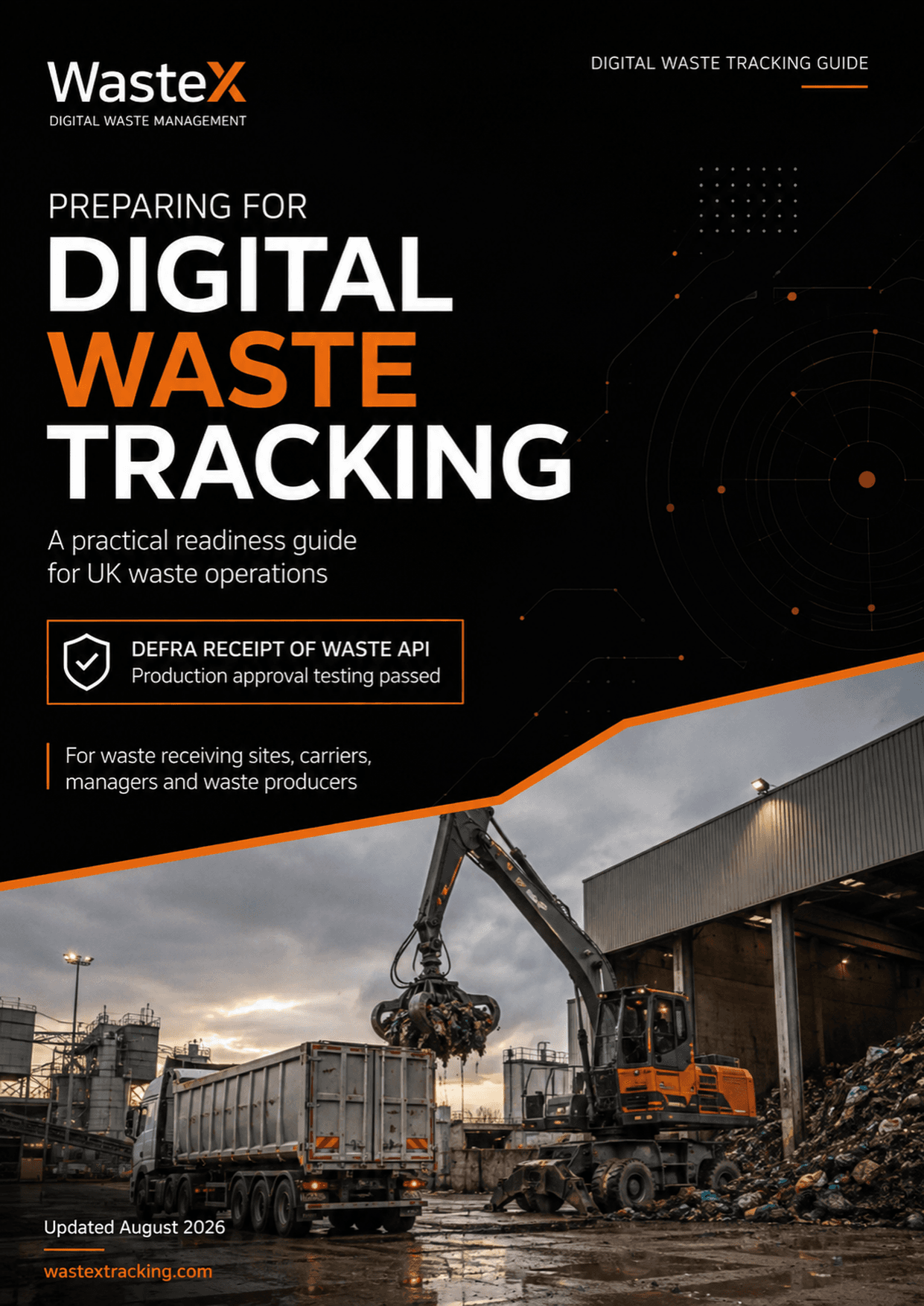
One part of the wider direction
Waste X is being shaped to support the industry's move toward structured digital reporting, while the day-to-day product remains focused on the operational work that creates those records in the first place.
Waste operations, connected